


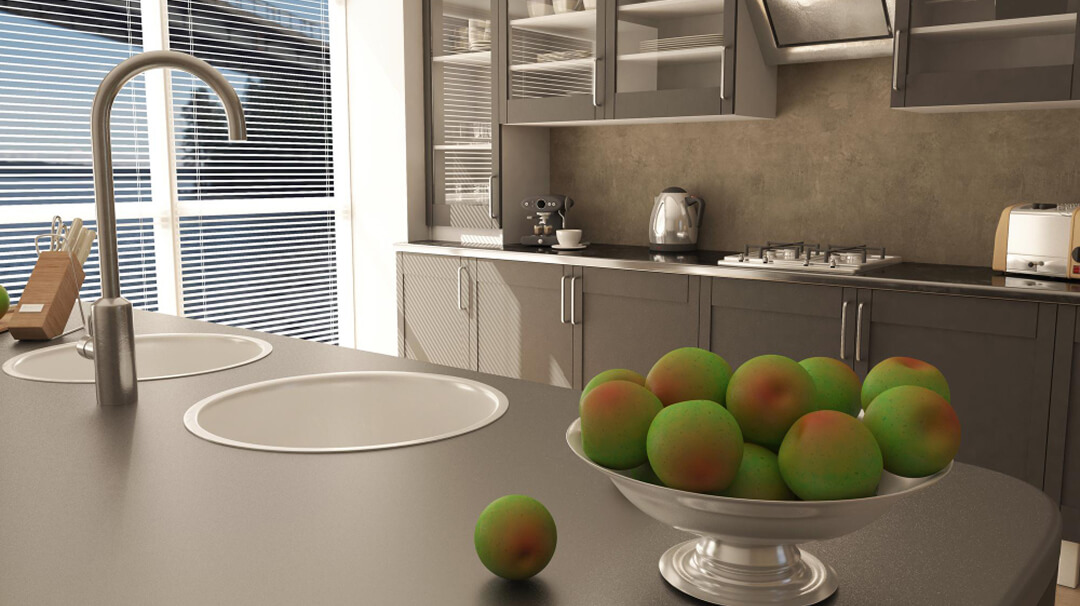
Kitchen design goes far beyond trendy colours or refined materials. It is the art of transforming your kitchen into a smart, seamless space tailored to your everyday life. A successful design combines aesthetics, ergonomics, and performance. Because a well-designed kitchen doesn’t just change your décor — it enhances the way you live.
Understanding the Fundamentals of Kitchen Design
Kitchen design is built on essential principles that turn a simple space into the true heart of the home: smooth circulation, strategic organization of prep, cooking, and cleaning zones, smart storage solutions, and perfectly balanced visual harmony.
In a renovation project, rethinking your kitchen design is not just about modernizing the look. It’s an opportunity to optimize space, improve everyday comfort, and adapt every detail to the real habits and needs of its users.
Among the key kitchen design concepts to consider:
- Work Triangle: This classic concept connects the sink, refrigerator, and stove — the three main hubs of a functional kitchen.
- Lighting: A good design includes general lighting as well as targeted light sources (under cabinets, above the island, etc.).
- Ventilation: A high-performance range hood, seamlessly integrated into the décor, is essential to preserve air quality and protect surfaces.
Choosing the Right Kitchen Design
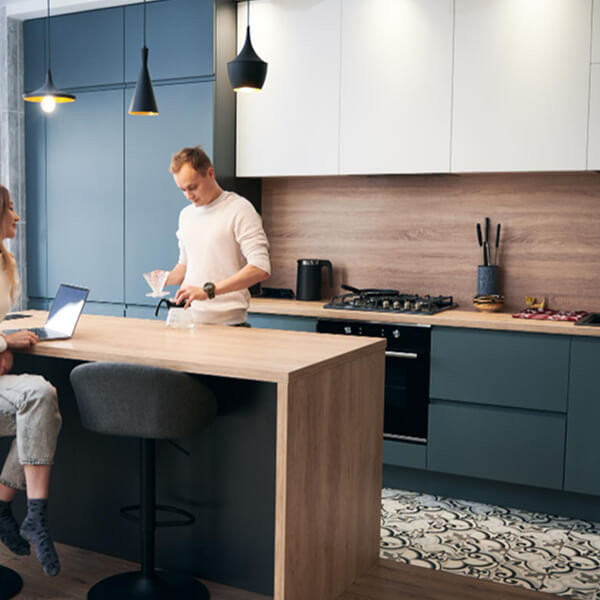
Designing a kitchen isn’t just about selecting stylish cabinets and countertops — it’s about structuring a functional space tailored to your daily routine. The choice of kitchen layout plays a key role in the success of your project.
Depending on the size, room configuration, and your habits, certain layouts may be better suited than others. They can provide greater flow, storage, or everyday comfort. Here’s an overview of the main configurations, along with their advantages and technical features.
1. L-Shaped Kitchen
The L-shaped kitchen works particularly well in medium-sized spaces or areas open to a dining room or living room. It typically consists of two perpendicular segments forming a right angle, often placed along two adjacent walls.
Why choose it:
- Offers excellent ergonomics with a smooth work triangle between the sink, refrigerator, and cooktop
- Frees up central space, making it ideal for adding a small table or breakfast nook
- Suitable for both closed kitchens and open-concept layouts, promoting easy movement between zones
It’s a versatile configuration that can be easily customized to create a functional and elegant kitchen design.
2. U-Shaped Kitchen
Highly valued in renovation projects when space allows, the U-shaped kitchen is a particularly functional layout. It occupies three walls, or two walls combined with a peninsula, to maximize work surfaces and storage. It creates an immersive workspace where everything is within reach.
Key advantages:
- Maximizes countertop surfaces and storage areas, making it ideal for cooking enthusiasts
- Allows clear separation between prep, cooking, and cleaning zones
- Can incorporate a breakfast area or lunch counter if one side opens to the living space
This type of kitchen is perfect for families or those who spend a lot of time cooking.
3. Linear Kitchen
Also known as a one-wall kitchen, the linear kitchen is installed along a single wall. It’s a minimalist configuration commonly used in apartments, condos, or urban studios.
Technical advantages:
- Ideal for small spaces or long, narrow rooms
- Simplifies installation on a single wall, reducing plumbing and electrical costs
- Pairs well with an open dining area without partitions
To compensate for limited depth, taller cabinetry or custom kitchen solutions can help maximize vertical storage.
4. Kitchen with Island
The kitchen with an island is one of the most popular choices in modern kitchen design projects. It features a central island that can serve as a workspace, dining area, or even a cooking station.
What to know before choosing an island:
- A minimum clearance of 36 to 48 inches around the island is necessary to ensure proper circulation
- The island can integrate appliances (dishwasher, cooktop, sink) if plumbing and electrical connections allow
- It becomes the central focal point of the kitchen, encouraging interaction among family members and guests
An island adds modernity and functionality — provided it is properly sized according to the space constraints.
The Importance of a Custom Kitchen
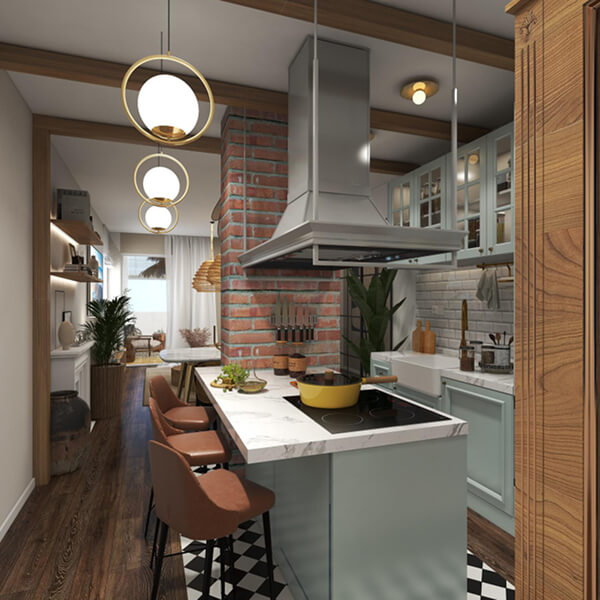
Choosing a custom kitchen allows you to optimize every available square foot and achieve perfect harmony between aesthetics and functionality. Unlike standard prefabricated modules, a personalized design adapts to the specific characteristics of the space: uneven walls, unconventional angles, sloped ceilings, and more.
Benefits of a custom layout:
- Perfect adaptation to the space, from small kitchens to large open areas
- Customization of materials and finishes: solid wood, laminate, quartz, ceramic, and more
- Seamless appliance integration without visual disruption
- Maximized storage through solutions such as deep pull-out drawers, corner units, and pantry cabinets
Kitchen design is not just about trends or style — it is above all an art of organization and a reflection on use and comfort. Whether you prefer clean contemporary lines, Scandinavian design, or a rustic-chic ambiance, every project deserves careful planning and precise execution.
Looking to transform your kitchen with intelligence and style? Trust Cuisi Boutique, your expert in kitchen design and custom renovations.


